
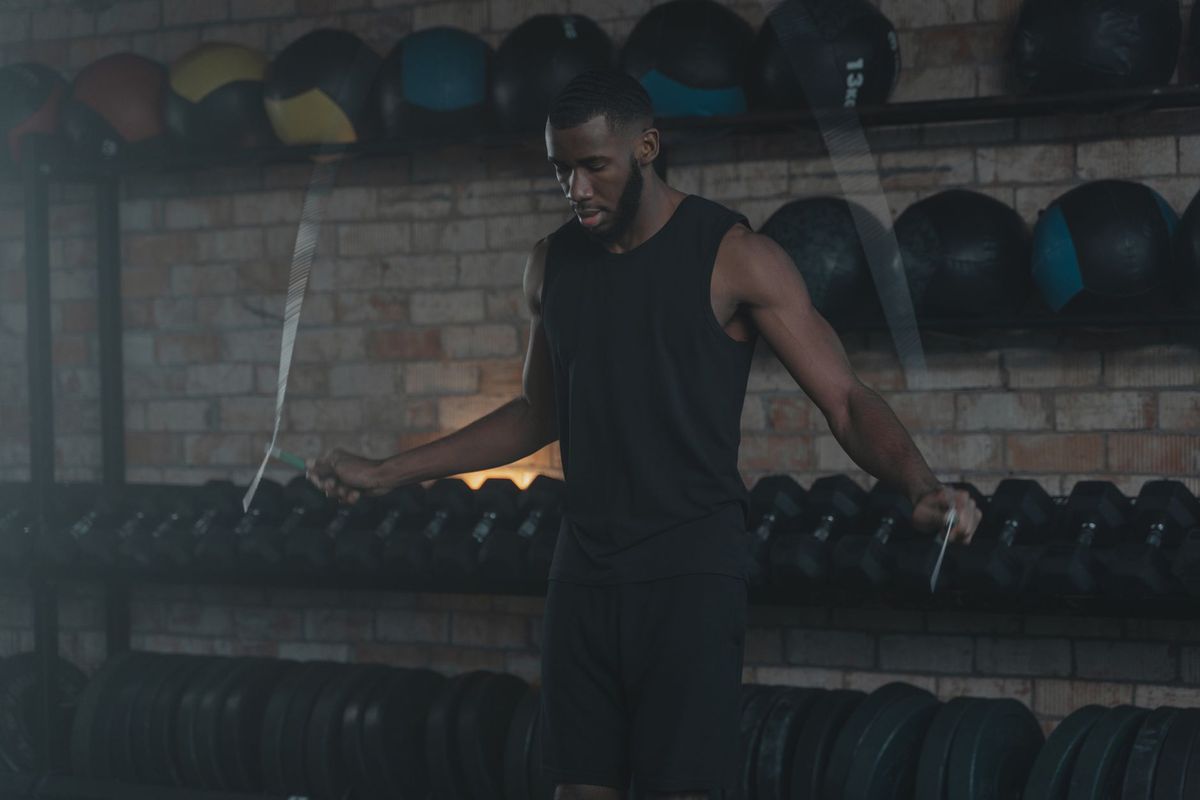
Gemma Atkinson, the 41-year-old fitness enthusiast from Manchester and former Women’s Health cover star, has highlighted skipping as a key element of her fitness regimen. Atkinson, known for sharing her training sessions, recently posted an at-home skipping workout featuring her daughter, Mia, on Instagram, reiterating her belief that consistent movement is vital for overall wellbeing.
“I remind myself daily that movement is…vital,” Atkinson stated in a separate post, adding, “Moving consistently doesn’t just change your body. It changes your mood, your mindset and your attitude. I’m a true believer that we don’t slow down because we age, but rather we age because we slow down.”
Following Atkinson’s endorsement, fitness experts have shared three distinct skipping workouts, suitable for various fitness levels, alongside the exercise’s significant health benefits, as reported by Women’s Health.
The Quick Sweat Workout
Anwen Davies, a PT specialising in functional fitness and accessible training, has designed a workout ideal for a quick, intense session:
- Warm-up (3 minutes): Begin with one minute of light bouncing on the spot without the rope, followed by two minutes of easy skipping at a relaxed pace.
- Main Set (12.5 minutes): Complete 10 rounds of 45 seconds of skipping at a brisk pace, followed by 30 seconds of rest. Maintain a steady rhythm throughout the intervals.
- Progression: Once comfortable with the main set, challenge yourself by incorporating high knees or double-unders (where the rope passes under your feet twice per jump) for the final 15 seconds of each interval.
- Cool-down (2-3 minutes): Slowly walk around, then stretch your calves, hamstrings, and shoulders.
Varying Your Footwork
For those looking to diversify their routine, Andy Carr, a master trainer and head of fitness at Snap Fitness UK, offers a workout focusing on different skipping techniques:
- Warm-up (4 minutes): Start with marching on the spot, a few bounces without the rope, then a couple of minutes of easy skipping.
- Main Workout (12 minutes): Perform 12 rounds of 40 seconds of skipping followed by 20 seconds of rest. If new to skipping, begin with 20 seconds on and 40 seconds off.
- Footwork Variation: Change your footwork every round, cycling through a normal two-foot bounce, alternating feet as if jogging, hopping side to side, and high knees.
- Cool-down (4 minutes): Conclude with a few minutes of slow skipping or marching, then stretch your calves, quads, and hips.
Zone 2 Training Explained
Rebecca Bossick, co-founder and clinical director at One Body LDN, provides a workout focused on Zone 2 training, which is roughly 60-70% of your maximum heart rate. At this intensity, you should still be able to speak in full sentences without losing breath, aiming for 80 to 100 skips per minute with a low, easy bounce.
- Warm-up (3 minutes): Engage in moderate skipping and marching on the spot.
- Main Set (15 minutes): Complete four rounds of three minutes of continuous skipping followed by one minute of marching.
- Progression: As your fitness improves, gradually extend the skipping intervals to five minutes and reduce the marching breaks until you can skip continuously for 15 minutes. Bossick advises that if your heart rate exceeds Zone 2, slow your pace but do not stop completely.
- Cool-down (2 minutes): Finish with slow walking and stretching.
Key Benefits of Skipping
Beyond its simplicity, skipping offers a range of significant health advantages:
- Cardiovascular Health: According to Rebecca Bossick, skipping quickly elevates your heart rate. Regular training enhances your body’s oxygen efficiency, potentially lowering your resting heart rate and blood pressure over time. The NHS classifies skipping as a vigorous-intensity activity, with about 11 minutes a day sufficient to help adults meet weekly physical activity guidelines. Skipping at 100-120 skips per minute equates to approximately 11.8 METs, comparable to running at 7mph.
- Bone Density: Anwen Davies explains that each landing places a small, repeated load on your feet, legs, and hips, which helps strengthen bones over time. A study in Hong Kong found that schoolgirls who skipped weekly had higher heel bone density after about 10 months. This is particularly crucial for women as they age and bone density naturally declines.
- Balance and Coordination: Andy Carr notes that skipping improves balance by requiring coordination of hands and feet while staying light on the balls of your feet. This becomes increasingly important with age to help prevent falls and ankle rolls. The varied movements also ensure the exercise remains engaging.
- Muscle Engagement: Bossick highlights that every jump engages your calves, thighs, Achilles tendons, and ankles as they absorb landings and generate force. Your feet and ankles constantly make small adjustments, enhancing balance and proprioception. Additionally, your abdominal and oblique muscles are activated with each jump to stabilise your spine and upper body.
For local readers in Manchester and across the UK, Atkinson’s accessible approach highlights that effective fitness doesn’t require a gym membership or extensive equipment. Whether preparing for personal fitness goals or simply aiming for better health, the principles of consistent movement are key – a dedication shared by many, from everyday enthusiasts to professional athletes gearing up for crucial fixtures, such as those discussed in previews like Man Utd vs Fulham: Premier League Preview, Kick-Off & Team.
Frequently Asked Questions About Skipping
Here are some common questions about incorporating skipping into your fitness routine:
- What is Gemma Atkinson’s philosophy on exercise? According to a post by Atkinson, she believes that “movement is vital” and that “we don’t slow down because we age, but rather we age because we slow down.”
- How much skipping does the NHS recommend for adults? Rebecca Bossick states that for adults, around 11 minutes of skipping a day is enough to help meet the weekly physical activity guidelines, as skipping is classified as a vigorous-intensity activity.
- What are some key benefits of skipping? Skipping raises heart rate, improves oxygen efficiency, helps lower resting heart rate and blood pressure, strengthens bones, and enhances balance and coordination.
- What is ‘Zone 2’ training for skipping? Rebecca Bossick explains that Zone 2 is roughly 60-70% of your maximum heart rate, meaning you should still be able to speak in full sentences without stopping to catch your breath, keeping the pace relaxed at around 80 to 100 skips per minute.
Sources