
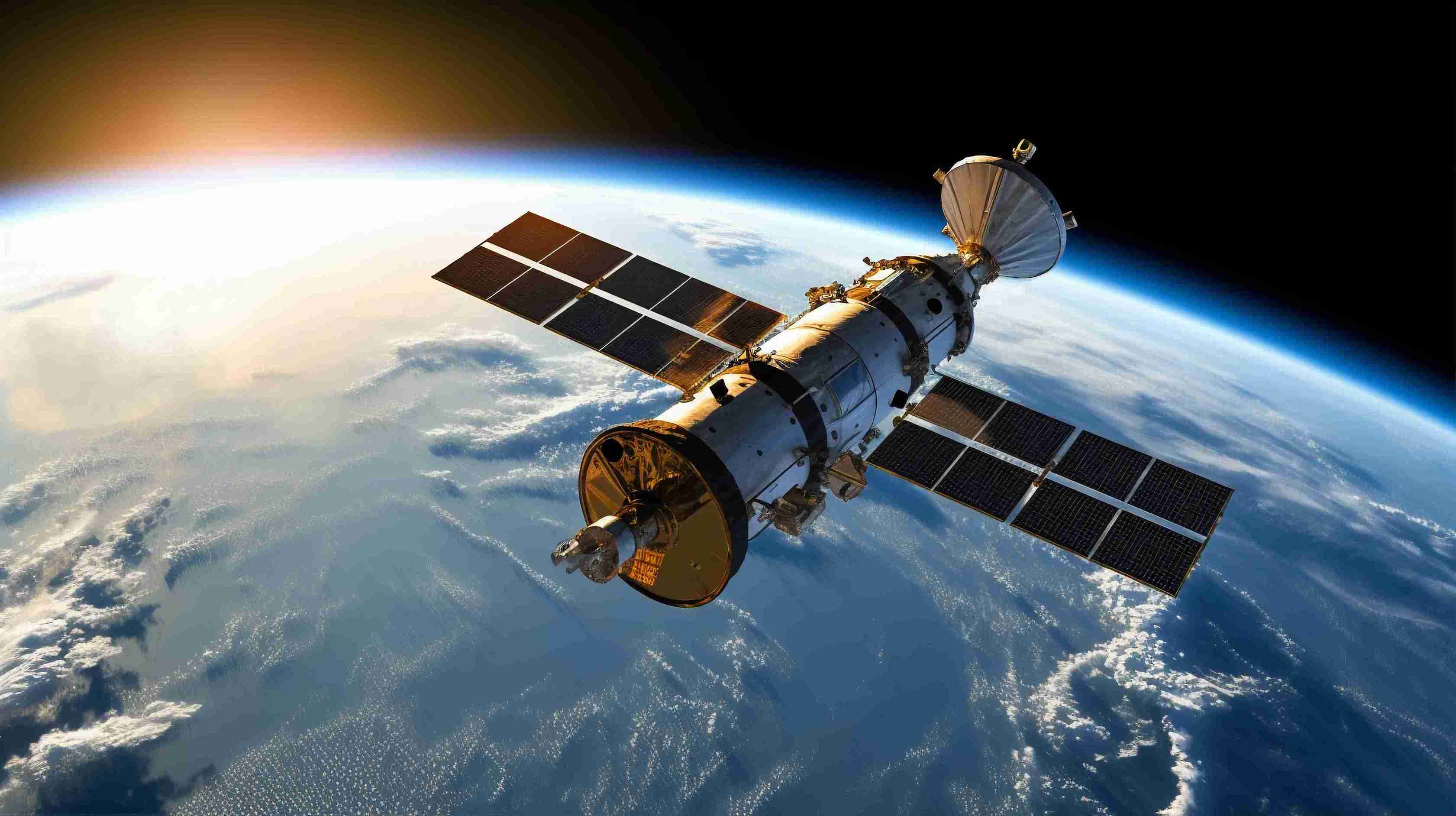
The James Webb Space Telescope (JWST) is one of the most ambitious and advanced space observatories ever launched. Designed to peer deeper into the universe than any previous telescope, JWST aims to answer fundamental questions about the origins of stars, galaxies, and planetary systems. By combining cutting-edge technology with innovative engineering, it has revolutionized our understanding of the cosmos and opened new frontiers in space exploration.
The development of JWST spanned over two decades, involving international collaboration between NASA, the European Space Agency (ESA), and the Canadian Space Agency (CSA). The telescope was designed to succeed the Hubble Space Telescope, offering enhanced sensitivity in the infrared spectrum. JWST was successfully launched on December 25, 2021, aboard an Ariane 5 rocket from French Guiana, marking a historic milestone in space science.
JWST features a segmented primary mirror spanning 6.5 meters, nearly three times the size of Hubble’s mirror, allowing it to capture faint light from the earliest galaxies. Its sunshield, composed of five layers, protects the telescope from heat and light, ensuring precise infrared observations. The telescope operates primarily in the infrared spectrum, enabling it to see through cosmic dust clouds and detect distant, faint objects that were previously invisible.
The James Webb Space Telescope has multiple scientific objectives. One of its primary goals is to study the formation of the first galaxies and stars after the Big Bang. It also aims to investigate the atmospheres of exoplanets, searching for signs of habitability or biosignatures. By observing the birth and evolution of stars, planetary systems, and black holes, JWST provides critical insights into the fundamental processes shaping the universe.
One of JWST’s most exciting missions is to explore the early universe. By detecting infrared light from galaxies formed billions of years ago, the telescope allows astronomers to study how these galaxies evolved over time. This capability enables researchers to understand the conditions that led to the formation of stars, planets, and eventually life as we know it.
JWST is transforming our understanding of exoplanets. Its instruments can analyze the chemical composition of distant planetary atmospheres, detecting water vapor, carbon dioxide, methane, and other essential molecules. These observations help scientists assess whether exoplanets could support life and provide valuable data for comparative studies of planetary systems, including our own.
Infrared observations are critical because they allow JWST to penetrate dust clouds that obscure visible light. This capability is essential for studying star-forming regions, planetary nebulae, and the cores of distant galaxies. Unlike Hubble, which observes primarily in visible and ultraviolet light, JWST’s infrared focus opens a new window into previously hidden regions of the cosmos.
JWST is equipped with four primary instruments: the Near Infrared Camera (NIRCam), the Near Infrared Spectrograph (NIRSpec), the Mid-Infrared Instrument (MIRI), and the Fine Guidance Sensor/Near InfraRed Imager and Slitless Spectrograph (FGS/NIRISS). Each instrument serves specific purposes, from high-resolution imaging to detailed spectroscopic analysis, allowing comprehensive observations across multiple wavelengths.
Since becoming operational, JWST has captured unprecedented images of distant galaxies, nebulae, and star clusters. Early observations have revealed intricate details of galaxy formation, cosmic dust structures, and the chemical composition of exoplanet atmospheres. These discoveries are reshaping theories about the evolution of the universe and providing astronomers with a wealth of data for future research.
JWST is revolutionizing astronomy by providing data that challenges existing models of galaxy formation, star birth, and planetary system development. Its ability to detect faint infrared signals allows scientists to explore the universe’s history with unparalleled clarity. The telescope’s discoveries also complement other observatories, both ground-based and spaceborne, creating a more comprehensive understanding of the cosmos.
The development of JWST faced numerous technical challenges, including designing a telescope that could unfold in space, survive extreme temperatures, and operate with extraordinary precision. Innovative engineering solutions, such as the segmented mirror and deployable sunshield, were essential for overcoming these obstacles. The successful deployment and calibration of JWST are testaments to human ingenuity and international collaboration.
JWST is expected to operate for at least a decade, offering unprecedented opportunities for scientific exploration. Upcoming research will include detailed studies of early galaxies, black holes, exoplanets, and cosmic phenomena such as supernovae and star-forming regions. The telescope’s data will guide the next generation of astronomers and inform future space missions, continuing to expand our understanding of the universe.