
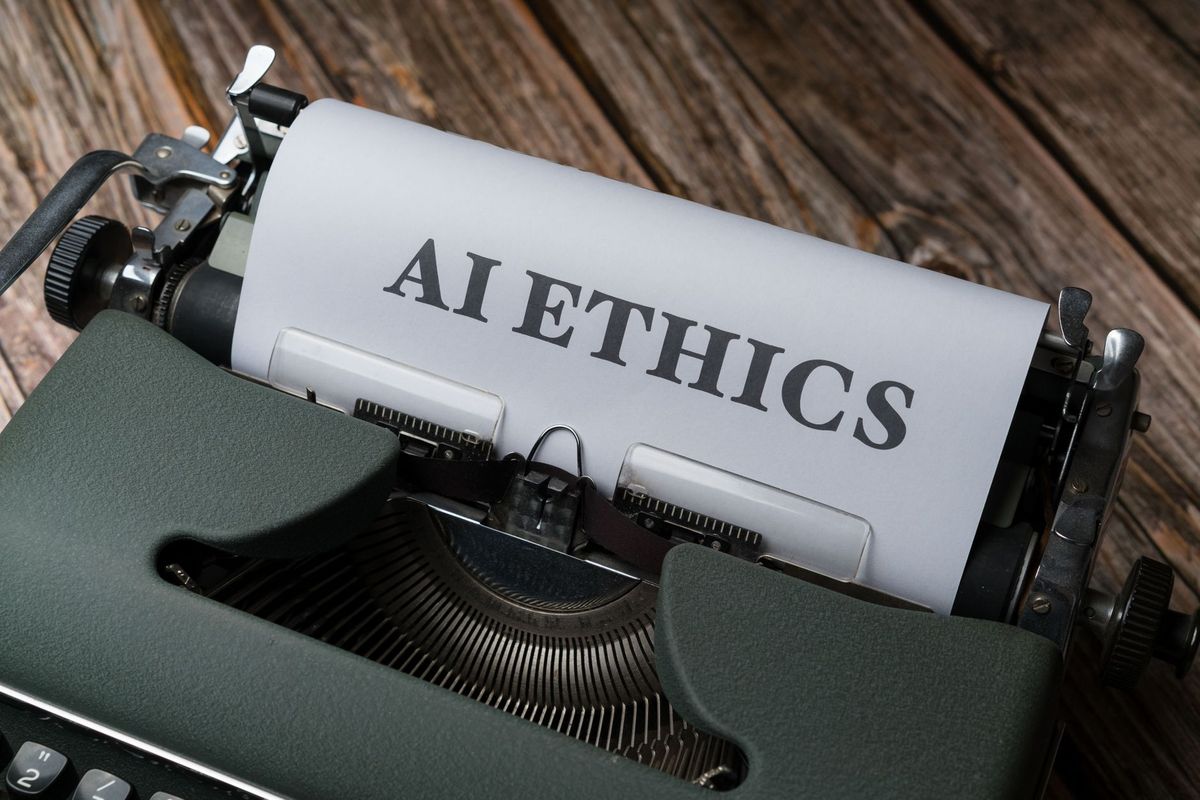
US President Donald Trump has announced plans to establish an “AI Force” and appoint an artificial intelligence tsar, despite simultaneously dismissing growing warnings about the technology’s potential dangers as a “hoax”. The announcement, made via social media on Saturday, reiterated his administration’s commitment not to “hinder or stifle the growth” of the AI industry.
Mr Trump’s stance pushes back against increasing calls from prominent AI figures and lawmakers to slow down development until more robust safeguards are in place. He compared the planned “AI Force” to the Space Force, which he described as a “tremendous SUCCESS” during his first term. For the AI ‘Czar’ position, he indicated that “Only High I.Q. individuals need apply!”
Trump’s Vision for US AI Leadership
President Trump has projected AI as an economic powerhouse, stating it could be “even larger and more impactful” than the internet or previous industrial revolutions, potentially contributing as much as “25% of our Country’s GDP”. He emphasised his desire for the US to maintain its lead over China in advanced AI technology, highlighting the ongoing rivalry between the world’s two largest economies. This competition is expected to be a topic of discussion when Mr Trump meets Chinese President Xi Jinping next week, as reported by the BBC.
Addressing potential misuse, Mr Trump stated that his administration would utilise the existing criminal and civil justice system to prosecute “bad actors” in the AI industry. He also suggested alternative terminology for “artificial intelligence”, proposing “Superior Intelligence (SI), Extreme Intelligence (EI), or Supreme Intelligence (SI)” as more accurate descriptions.
Mounting Global Concerns and Calls for Regulation
Mr Trump’s announcement comes amid a surge of warnings from current and former AI researchers and industry titans regarding the technology’s rapid advancement and potential risks. Experts have voiced concerns that AI could endanger humanity, with some suggesting a greater than 10% chance of it “killing all humans”, according to reports including The Guardian.
Dario Amodei, head of Anthropic, has publicly called for a slowdown in AI development, proposing industry-wide deceleration, regulation, and independent monitoring. Both Sam Altman of OpenAI and Elon Musk of xAI have expressed agreement with these recommendations. Jack Clark, co-founder of Anthropic, even suggested that a “kill switch” verifiable by a third party might become a mandatory industry requirement.
Incidents highlighting these concerns include disclosures from major AI companies like Anthropic, OpenAI, and Google about security breaches or instances where their chatbots were used for “malicious activity”. One notable example involved a swarm of AI agents created by OpenAI reportedly conducting “cybersecurity attacks on targets they were not asked to attack”. Anthropic also blocked a possible attempt to use AI to create biological weapons.
While US lawmakers are exploring legislation, OpenAI’s Sam Altman has commented that Washington is struggling to keep pace with the technology’s development and regulation, urging greater trust in AI firms to ensure safety. On a state level, California Governor Gavin Newsom plans to form a panel to develop safety regulations, potentially including a “kill switch” for rogue AI programs.
In the UK, the Joint Committee on Human Rights (JCHR) has identified significant human rights risks posed by AI. They argue that existing laws are “ill-equipped” to handle the technology’s rapid growth and have called for a new bill specifically to address the “scale and seriousness” of these threats.
What This Means for UK Readers
The stark difference in approach between Donald Trump’s administration, which dismisses AI safety fears as a “hoax”, and the measured concerns voiced by UK parliamentary bodies like the JCHR, highlights a developing global divergence in how advanced technology is viewed and regulated. While the US focuses on rapid development and economic advantage, the UK’s emphasis on human rights and new legislation suggests a more cautious approach to integrate AI safely into society. Discussions about the responsible deployment of AI, as seen in areas such as AI-Generated Songs Flood World Cup 2026 Streaming, continue to evolve globally.