
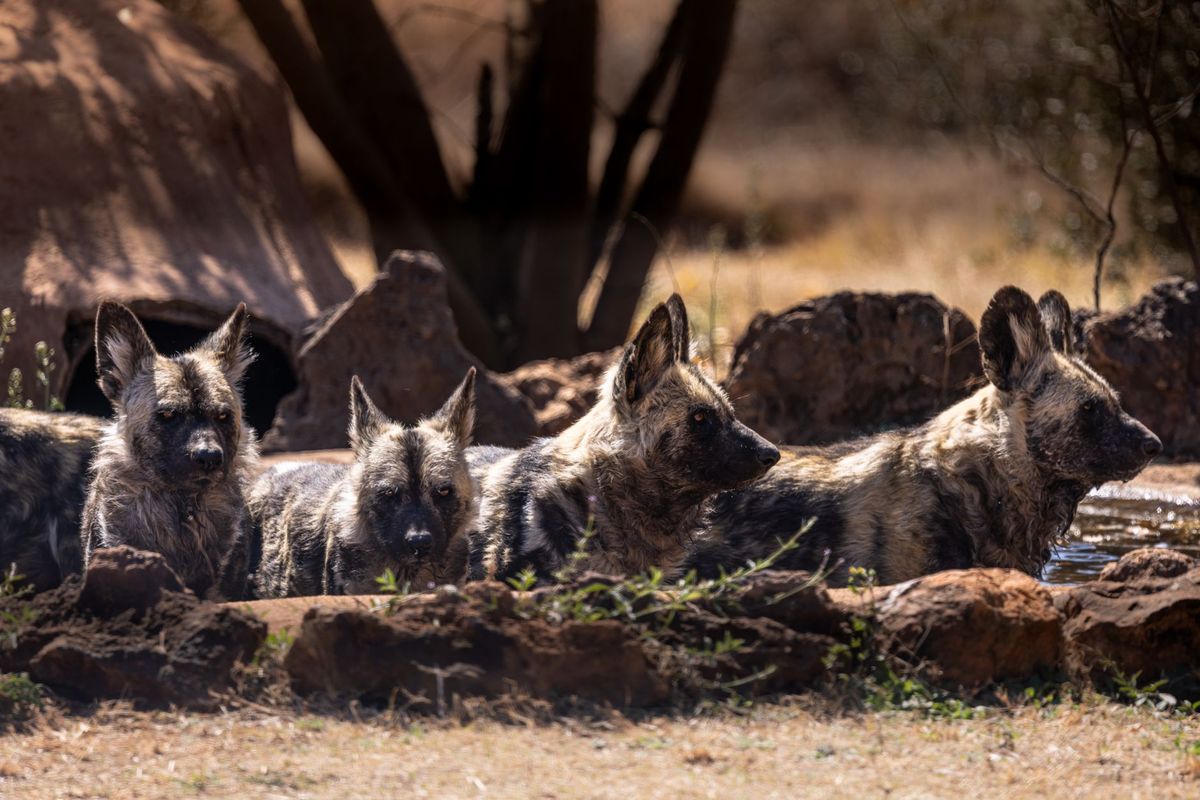
Three male African wild dogs have completed a record-breaking 2,485-mile (4,000km) journey across Zambia, marking the longest recorded distance for any African land mammal searching for a mate. This extraordinary trek, detailed in a new study, offers significant hope that wildlife can traverse vast distances despite increasing human pressures on landscapes.
Record-Setting Dispersal Across Zambia
The trio, known as the Mayukuyuku males, embarked on their nine-month odyssey from Kafue National Park in mid-2025. They zigzagged across Zambia, navigating a landscape increasingly shaped by human development and successfully avoiding major obstacles, including the capital city, Lusaka, and heavily industrialised areas. By April 2026, they had covered 4,126 km (2,564 miles), eventually reaching a game management area between the national parks of South Luangwa and Lower Zambezi, as reported by Mongabay.
While their straight-line distance was approximately 260 miles, their intricate route covered nearly ten times that overall. Scientists describe these one-way journeys in search of a mate as “dispersals,” distinguishing them from seasonal “migrations” that animals undertake for food or habitat. African wild dogs, among Africa’s rarest predators with only about 6,000 remaining in the wild, typically disperse from their birth packs at the age of two or three to find new breeding opportunities, according to BBC News.
Hope for Connected Populations Amidst Threats
The findings suggest that wild dog populations across eastern and southern Africa may be more connected than conservationists previously thought. Professor Scott Creel of Montana State University, the lead author of the study published in the journal Ecology, expressed cautious optimism. “It’s plausible to believe that every major wild dog population in eastern and southern Africa, other than fenced ones, are potentially connected,” he stated.
However, the journey was not without significant dangers. The research highlighted the pervasive threat of illegal snares; while the three males completed their trek, other wild dogs tracked with GPS collars died in such traps. A separate group of three sisters almost completed an equally long journey, but it ended tragically when one became trapped in a snare, with two of the three females dying during the research.
Future of Conservation
Bruce Ellender, a co-author from The Nature Conservancy, emphasised the critical need for connected landscapes. He argued that protected areas cannot be viewed as isolated “islands” for species that roam widely, such as wild dogs and elephants. Matt Becker, chief executive of the Zambian Carnivore Programme and another co-author, advocated for improved conservation models that integrate economic benefits, such as nature-based tourism or sustainable game ranching, asserting: “We don’t need to separate people from nature.”
The study adds weight to calls for creating natural land corridors outside protected zones, linking separate wildlife habitats fragmented by human infrastructure like roads, towns, or farms. This approach is seen as crucial for the long-term survival of species that require extensive territory.