
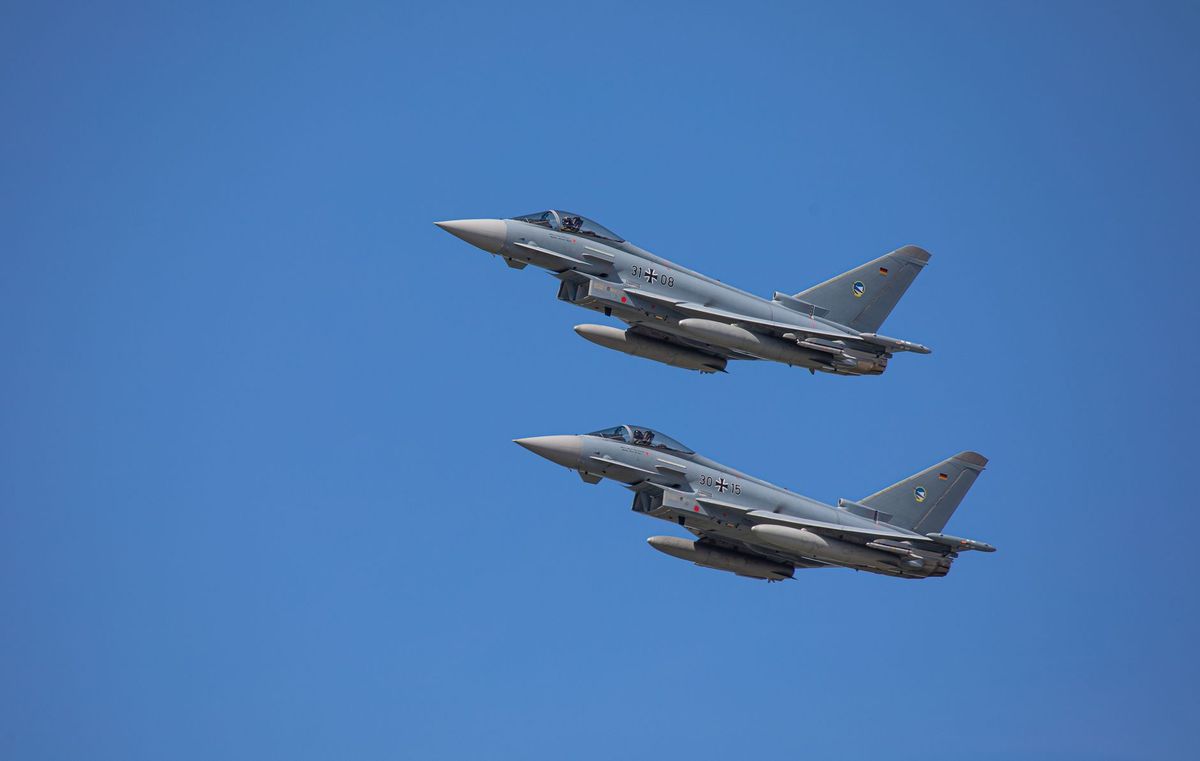
The United Kingdom has significantly advanced its commitment to next-generation air combat technology with a substantial new investment and a major development contract. A sum of £708 million has been allocated to accelerate the UK’s next-generation air combat technology, according to GOV.UK. This investment is coupled with the award of a huge new contract aimed at developing the new GCAP fighter jet, as reported by the UK Defence Journal. These initiatives underscore the UK’s strategic focus on modernising its defence capabilities.
Background
The development of advanced air combat capabilities remains a strategic priority for the UK. The recent financial injection and contract awards highlight a concerted effort to push the boundaries of military aviation technology. Complementing these developments, Defence Secretary Streeting has called for UK defence to significantly boost its use of Artificial Intelligence (AI), according to London South East. This emphasis on AI integration points towards a future where intelligent systems play a crucial role in the UK’s defence framework, potentially influencing the very nature of next-generation combat air systems.
Accelerating Next-Generation Air Combat
The UK government has committed a significant £708 million to accelerate the nation’s next-generation air combat technology. This funding, announced by GOV.UK, is central to the UK’s strategy for maintaining a leading edge in defence capabilities. The investment is specifically earmarked to speed up the research, development, and implementation of advanced technologies that will form the backbone of future air combat systems. Such a substantial financial commitment reflects the UK’s dedication to innovation within its defence sector, aiming to ensure its armed forces are equipped with state-of-the-art technology. This acceleration is crucial for the continuous evolution of combat air platforms, ensuring they meet the demands of future operational environments and maintain strategic advantage. The focus on next-generation technology implies an overarching strategy to integrate cutting-edge advancements across various facets of air warfare, from aircraft design to operational methodologies.
Developing the GCAP Fighter Jet
In a parallel and equally significant development, a huge new contract has been awarded for the development of the new GCAP fighter jet. The UK Defence Journal reported on this substantial contract, which signals a major step forward in the creation of advanced combat aircraft. The GCAP fighter jet project is positioned as a cornerstone of the UK’s future air combat capabilities. The award of such a “huge new contract” suggests a significant scale of ambition and investment dedicated to bringing this advanced aircraft to fruition. The development process for a fighter jet of this calibre typically involves extensive research, design, testing, and collaboration, requiring considerable resources and expertise. This project is integral to the broader effort to establish a next-generation air combat system for the UK, aiming to deliver a highly capable platform designed to operate effectively in complex and evolving threat landscapes. The emphasis on a “new” fighter jet underscores the intention to integrate the latest technological advancements, ensuring it represents a significant leap forward in air defence and offensive capabilities.
The Role of AI in UK Defence
Further enhancing the UK’s future defence posture, Defence Secretary Streeting has issued a call for UK defence to boost its use of Artificial Intelligence. This directive, highlighted by London South East, points towards a strategic embrace of AI technologies across military operations. The integration of AI is expected to bring transformative changes, from enhancing decision-making processes and intelligence gathering to improving the autonomy and effectiveness of various defence systems. For next-generation air combat technology, AI could play a pivotal role in areas such as advanced sensor fusion, autonomous flight capabilities, and predictive maintenance. The Defence Secretary’s emphasis on boosting AI use suggests a recognition of its potential to revolutionise how defence assets operate and how military challenges are addressed. This push for AI integration aligns with the broader global trend of leveraging advanced computing for strategic advantage, aiming to ensure that the UK’s defence capabilities remain at the forefront of technological innovation and operational efficiency. The call for increased AI adoption underscores a forward-thinking approach to defence, recognising that future threats and operational environments will require sophisticated, intelligent solutions.
FAQ
- Q: What is the latest investment dedicated to UK air combat technology?
A: The UK government has allocated £708 million to accelerate the nation’s next-generation air combat technology, according to GOV.UK. - Q: What is the GCAP fighter jet?
A: The GCAP fighter jet is a new combat aircraft currently under development, following the award of a huge new contract as reported by the UK Defence Journal. - Q: What has Defence Secretary Streeting called for regarding UK defence?
A: Defence Secretary Streeting has urged UK defence to boost its use of Artificial Intelligence, a development highlighted by London South East. - Q: What is the overall objective of these defence initiatives?
A: The collective objective of these initiatives, including significant investment and new contracts, is to accelerate the UK’s next-generation air combat technology and enhance its overall defence capabilities.
What this means for you
For residents of Manchester and Greater Manchester, and indeed for the wider UK audience, these developments signify the nation’s ongoing commitment to advanced technology and national security. While the direct impacts may not be immediately visible in daily life, such investments in next-generation defence capabilities contribute to the UK’s strategic independence and its role on the global stage. The acceleration of air combat technology and the development of the GCAP fighter jet underscore a broader national effort in innovation and engineering, which can indirectly foster high-skilled job opportunities within the aerospace and technology sectors across the country. Furthermore, the Defence Secretary’s call to boost AI use in defence highlights a forward-thinking approach to national security, ensuring the UK remains equipped to address evolving threats. These initiatives, while focused on defence, reflect a national drive towards technological excellence and self-reliance. Just as discussions about advanced technologies, such as those related to Portasplit Air Conditioners Boost Europe’s Heatwave Response, highlight how innovation responds to global challenges, the investment in future combat air systems demonstrates the UK’s strategic response to complex security needs, aiming to safeguard national interests and contribute to stability.