
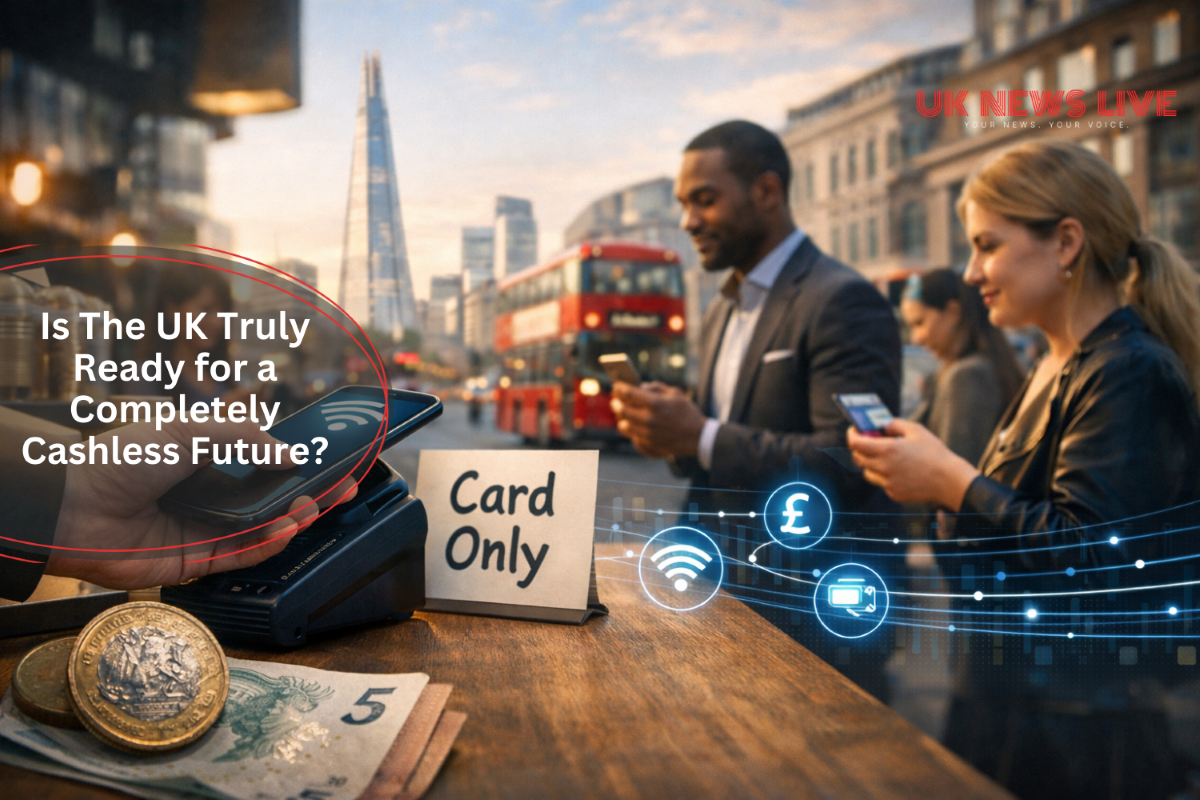
Walk into any trendy coffee shop in London or Manchester today, and you are increasingly likely to encounter a small, polite sign by the till: “Card Only.”
It is a subtle shift that has been gaining momentum for years, but in 2026, the reality of a cashless society feels closer than ever. For many of us, the convenience of tapping a phone or watch to pay for a morning latte is undeniable, yet this rapid digital migration raises serious questions about inclusivity and resilience.
The debate isn’t just about nostalgia for copper coins or paper notes; it is about the fundamental structure of our economy. As high streets evolve and bank branches continue to close, the reliance on digital infrastructure has become absolute.
While the ease of transaction is a major benefit for the tech-savvy majority, we must pause to ask if the entire nation is truly prepared to abandon physical currency for good.
Accessibility Issues in Entertainment and Leisure

The leisure and entertainment sectors have been among the fastest adopters of digital-only ecosystems, often outpacing general retail. From booking concert tickets to engaging in online gaming, the expectation is that users have immediate access to digital banking. This shift has streamlined user experiences, allowing for instant access to services without the friction of handling physical money or waiting for slow transfers.
However, this digital exclusivity can create barriers for those who prefer alternative funding methods or have specific banking restrictions. For example, users engaging in online gaming often look for platforms that support their specific credit facilities to ensure smooth gameplay. Those exploring options like casinos with credit card deposit options expect seamless experiences where funding is instant and secure, mirroring the convenience found in other digital entertainment sectors. If the financial infrastructure does not support a wide variety of digital payment methods, these industries risk alienating a segment of their user base that demands flexibility.
The Declining Usage of Physical Currency

The statistics painting the picture of our financial habits are stark and undeniable. We have reached a tipping point where physical money is no longer the dominant, or even the secondary, method of payment for most Britons. The acceleration of contactless technology, driven by consumer demand for speed, has pushed cash to the margins of daily economic life.
In 2024, cash accounted for just 9% of all payments in the UK, marking the first time physical currency fell below the 10% threshold. This decline is not merely a fluctuation but a structural change in how value is exchanged. For businesses, handling cash is becoming an expensive logistical challenge, leading many to opt for digital-first models that streamline operations but fundamentally alter the consumer landscape.
Security Concerns Regarding Digital-Only Transactions

However, this rush toward a frictionless economy brings with it significant risks that often go overlooked until a crisis hits. When a system relies entirely on digital networks, it becomes vulnerable to technical outages, cyberattacks, and software glitches. A cashless society assumes 100% uptime, a standard that even the most robust banking systems struggle to guarantee year-round.
Beyond technical failures, there remains the pressing issue of fraud and the protection of vulnerable users. A recent report from Loughborough University warns that the rapid shift towards cashless payments risks leaving vulnerable populations behind while exposing users to new forms of digital fraud. Without the option of cash as a backup or a budgeting tool, those with limited digital literacy or access to secure banking technology face an increasingly precarious financial existence.
Predicting the Financial Landscape of 2030
As we look toward the end of the decade, the question remains whether cash will vanish entirely or settle into a niche role. The trend lines suggest a continued reduction in physical notes, but human behaviour is rarely linear. There is a growing counter-movement that values payment safety and privacy and the tangible nature of cash, suggesting that a hybrid model may be the most sustainable outcome rather than a total digital switch.
Interestingly, while the trajectory is downward, a significant portion of the population still clings to the security of physical money. Data suggests that 16.9 million UK adults lived largely cashless lives in 2024, utilizing physical money once a month or less. While this number is high, it also indicates that millions of adults still do not fit into this category, proving that a completely cashless UK by 2030 remains an ambitious, and perhaps unlikely, reality.